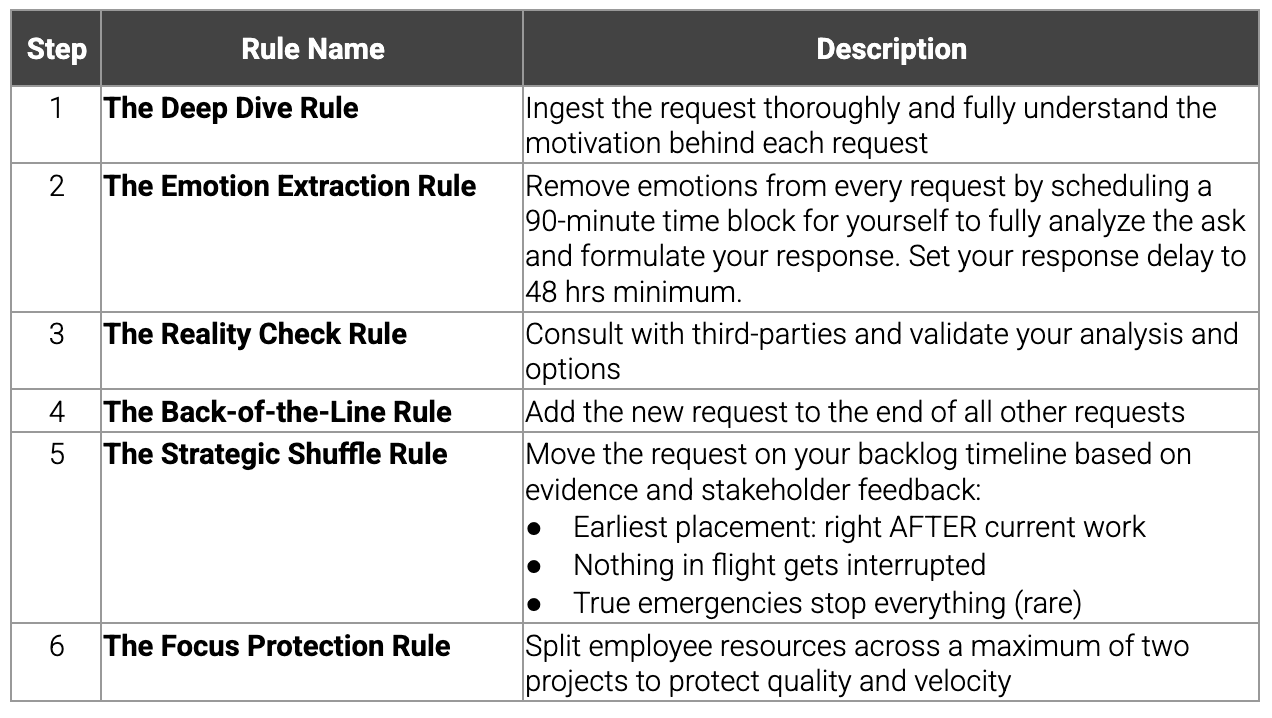
The Focus Protection Rule
Split employee resources across a maximum of two projects to protect quality and velocity
The magic happens in Step 2—The Emotion Extraction Rule. When you remove the panic, urgency, and politics from a request, you can analyze it based on evidence and data. This is where you craft your two strategic options that position you as the thoughtful leader, not the reactive manager.
Why This Works (When Everything Else Fails)
Traditional prioritization fails because it’s reactive. You’re constantly reshuffling based on who yells the loudest.
Dr. Degnan’s Prioritization System is different. It forces discipline while maintaining flexibility. You’re not the person who says no—you’re the strategic thinker who presents options based on data, not drama.
More importantly, it protects your team from the chaos that burns people out. When everything is urgent, nothing is urgent. When you have a system, real priorities emerge.
The Burnout Connection
Weak prioritization systems are burnout factories.
When teams constantly switch contexts, quality suffers, deadlines slip, and everyone works longer hours to compensate.
Dr. Degnan’s Prioritization System breaks this cycle by creating predictable workflows and protecting focus time. Your team delivers better results in less time because they’re not constantly context-switching between “emergencies.”
Make This Work for You
Ready to implement this? Start tomorrow with these steps:
- Block 90 minutes on your calendar for every new request analysis
- Create a simple tracking system for all requests (spreadsheet works fine)
- Practice removing emotion and developing two data-driven options for your next request
- Communicate your new approach to your team
Remember: The goal isn’t to do everything. It’s to do the right things exceptionally well while positioning yourself as the strategic leader who brings solutions, not problems.
Want to master this system and level up your executive presence? Let’s talk about how I can help you implement these strategies—book time with me athttps://Intro.co/OliverDegnan.
Cheers!
—Oliver
Note: This article is based on personal executive experience and proprietary frameworks developed through 20+ years of leadership practice. No external research citations were required for this content; just a lot of blood and sweat from the trenches of a CIO.